The Profound Interplay of Science, Spirituality, and Recovery: A Philosophical Odyssey


The enduring quest to comprehend the cosmos and our place within it has entranced the minds of scientists and philosophers alike. This journey has led these seekers of truth to profound reflections on the intricate relationship between science, spirituality, and the eternal human quest for meaning. Within the context of recovery, this delicate interplay takes on a significant dimension. This article embarks on a philosophical exploration, seeking the profound reflections of prominent thinkers, including both scientists and philosophers, to uncover the enigmatic role of spirituality and a connection to a higher power in the recovery process. Through these reflections, we endeavor to illuminate the profound role spirituality plays in the journey to sobriety and personal transformation. Moreover, we will endeavor to weave these ideas into the broader fabric of questions about existence, the human hunger for meaning, and the moral guide that steers us.

The Confluence of Science and Spirituality
Before we delve into the depths of philosophical musings, we must first acknowledge that the demarcation between science and spirituality is a mirage. Great physicists like Albert Einstein have dared to venture into the realm of spirituality, proposing a harmonious coexistence of these seemingly disparate realms. As Carl Sagan so poetically put it, "The cosmos is within us. We are made of star-stuff. We are a way for the universe to know itself." Sagan's words encapsulate the idea that science is an intimate dance with our comprehension of existence, blurring the lines between the material and the spiritual.
Science and spirituality are not foes but complementary lenses through which we explore our existence. They share a common aspiration: to unravel the profound mysteries of the universe and our place within it. The mysteries that science unravels do not diminish the spiritual dimensions of life but rather enrich them. Alan Watts, a philosopher renowned for bridging the gap between Eastern and Western thought, astutely pointed out, "If the universe is meaningless, so is the statement that it is so." His words remind us that understanding the universe, even if it seems comprehensible, doesn't render it devoid of meaning. Instead, it opens the door to deeper, more nuanced interpretations. The quest to understand the universe may, in fact, be a spiritual endeavor in itself.
The Quest for a Higher Power in Recovery
In the realm of recovery, individuals find themselves on a sacred journey in search of a higher power that can guide them to sobriety. Programs like Alcoholics Anonymous emphasize the significance of acknowledging a power greater than oneself. Surrendering to a power beyond our comprehension can serve as a wellspring of strength and rejuvenation.
The search for a higher power is a fundamental aspect of the recovery process. It represents a departure from self-centeredness and a recognition that there are forces beyond our control. In many ways, it mirrors the scientific quest to understand the cosmos, acknowledging the limits of human knowledge. This humility in acknowledging our vulnerability and our reliance on a higher power is not a sign of weakness but a step toward recovery and personal transformation. It reminds us of our interconnection with something greater than ourselves, just as we are interconnected with the vast cosmos.
Spiritual Reflections on Personal Transformation
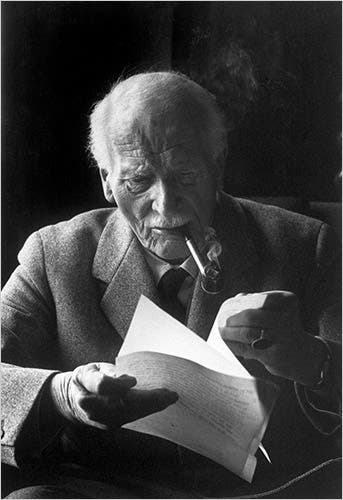
The eminent philosopher and psychologist Carl Jung furnishes profound insights into personal transformation. Jung's concept of individuation, the process of uniting the myriad facets of the self, resonates deeply with the recovery journey. Jung once illuminated, "The meeting of two personalities is like the contact of two chemical substances: if there is any reaction, both are transformed." In the context of recovery, individuals undergo profound metamorphosis as they confront their internal conflicts, endeavoring to become whole. Embracing the spiritual dimension of one's identity becomes a cornerstone of this transformative path.
The journey of recovery is, at its core, a journey of self-transformation. It is a process of confronting one's inner demons, acknowledging past mistakes, and striving to become a better version of oneself. Just as Jung's individuation involves the integration of various aspects of the self, recovery necessitates the integration of one's spiritual dimension. This entails coming to terms with one's vulnerabilities, seeking redemption, and embracing a higher purpose. In essence, personal transformation in recovery mirrors the universal process of growth and evolution that science continually unveils.

The Yearning for Meaning
The yearning for meaning beats at the core of the human spirit. Philosopher Viktor Frankl, a survivor of the Holocaust, accentuated the significance of uncovering purpose in life. His words reverberate with the spiritual aspect of recovery: "Life is never made unbearable by circumstances but only by lack of meaning and purpose." The pursuit of meaning intertwines intimately with the recovery journey, serving as a compass to navigate the trials and uncertainties that beset the path to sobriety.
The quest for meaning is not a solitary endeavor but a shared human longing. Just as the scientific quest for knowledge is driven by a curiosity to unveil the mysteries of the universe, the quest for meaning is a response to the mysteries of human existence. These dual quests are interconnected, with each shedding light on the other. The recovery journey, like the scientific quest, is an exploration into the depths of human experience. It is a quest to understand not only the mechanics of addiction but also the meaning of one's life.

Morality and the Guiding Light of Recovery
The concept of morality, ethics, and personal values plays a pivotal role in both recovery and spirituality. Famed physicist Richard Feynman once contemplated the nature of morality, emphasizing, "The first principle is that you must not fool yourself, and you are the easiest person to fool." In the context of recovery, ethical considerations lead individuals toward wiser choices and self-improvement. The moral compass that arises from the amalgamation of personal values and spiritual beliefs becomes a potent tool to navigate life's intricate tapestry during recovery.
Morality in the context of recovery represents a commitment to principles that guide one's behavior. These principles are rooted in a sense of right and wrong, akin to the ethical frameworks that govern scientific inquiry. Richard Feynman's assertion that "you must not fool yourself" is a call to honesty and integrity that resonates deeply with recovery. The recovery journey demands a rigorous examination of one's actions, a commitment to making amends, and an adherence to principles that foster personal growth. Just as science thrives on the pursuit of truth, recovery thrives on the pursuit of moral growth and self-improvement.
Conclusion
In the intricate interplay of science, spirituality, and the quest for cosmic comprehension, we unearth profound insights into the journey of recovery. By exploring the philosophical reflections of influential scientists and philosophers, we gain deeper insights into the role of spirituality and a connection to a higher power in recovery. These perspectives offer guidance, purpose, and a moral framework to achieve sobriety and personal transformation.
As individuals grapple with their own existential queries, they may find solace and strength in the embrace of the spiritual dimension of their recovery journey. The synthesis of these diverse philosophical concepts ultimately reveals a shared human aspiration for meaning and the ceaseless pursuit of a more enriched life. In our exploration of the nexus of science and spirituality, we are reminded that our quest for recovery is deeply intertwined with the grand tapestry of existence itself. It is not merely about overcoming addiction but a quest to connect with the very essence of what it means to be human. The recovery journey is a testament to the resilience and boundless potential of the human spirit to transcend its limitations and seek the profound in the seemingly ordinary.